Solar Panel Roof Positioning Guide
Quick Answer
The best solar panel roof position is usually the largest unshaded south-facing roof plane in the Northern Hemisphere. But that answer has a catch. In real roof designs, east- or west-facing panels often produce an industry-estimated 10% to 20% less annual electricity than similar unshaded south-facing panels, yet they can still be the better choice when the south roof is shaded, cramped, or cut up by dormers and vents. The real decision is not which direction sounds ideal. It is which roof plane produces the most useful annual kilowatt-hours after shade, pitch, roof obstructions, and layout quality are all considered together.
What Roof Positioning Means
Direction, Tilt, Shade, and Usable Area
Solar panel roof positioning means choosing the roof surfaces where panels will actually perform well. It is more than pointing the array south and calling it done. A proper layout looks at roof direction, roof pitch, shade patterns, clear roof space, panel grouping, and how the house uses power during the day.
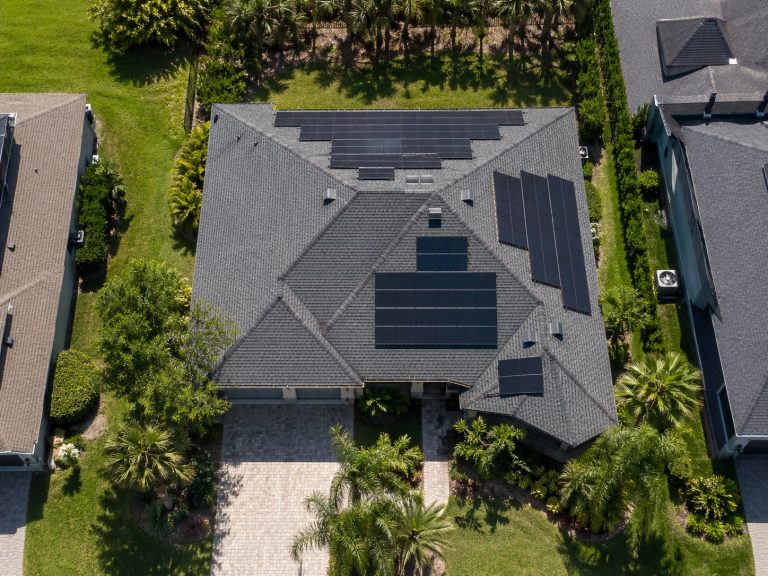
In the field, the best solar roof areas are usually boring: large, open, simple, and mostly free of shade. A clean roof plane with average orientation can beat a “perfect” direction that is chopped up by chimneys, skylights, plumbing vents, dormers, and tree shadows.
Why Positioning Is an Efficiency Decision
Roof positioning is an efficiency issue because it decides how much electricity the system can make. It is not mainly about how the roof looks. It is not even about how many panels can technically fit.
A bigger system is not automatically a better system. If the extra panels are sitting on weak roof planes, the homeowner may be buying more equipment without getting much more useful production. The better comparison is estimated annual kilowatt-hours, not just panel count or system size.
Best Roof Direction
South-Facing Panels
For most US homes in the Northern Hemisphere, an unshaded south-facing roof plane is usually the first place to look. It tends to receive strong sun through the middle of the day, which is why south-facing arrays often produce the strongest annual output.
But south is not magic. A south-facing roof covered by afternoon tree shade can be a poor choice. A narrow south-facing strip that only fits a few panels may also be less useful than a larger, cleaner east-west design. Direction matters. Shade and usable area can matter more.
East-Facing Panels
East-facing panels make more of their power earlier in the day. They can be a good fit when the home uses meaningful morning electricity or when the east roof is clear and the south roof is shaded, too small, or broken up.
The tradeoff is later-day production. East-facing arrays usually taper off sooner in the afternoon. For a home with heavy late-day air conditioning, cooking, or EV charging, that timing may not line up well. As a practical industry estimate, east-facing panels are often modeled around 10% to 20% below comparable unshaded south-facing panels, depending on location, pitch, and shade.
West-Facing Panels
West-facing panels produce later in the day. That can be useful for homes with strong afternoon and early evening loads, especially where utility rates make later production more valuable than midday production.
West is not automatically bad. It may produce less total annual electricity than a strong south-facing plane, but the timing can be valuable. A west roof with clean exposure can be a very reasonable part of the layout.
East-West Layouts
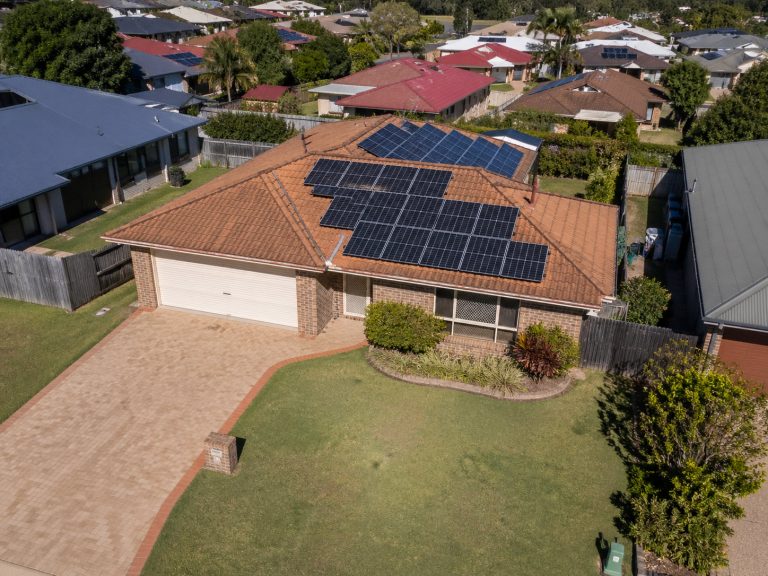
An east-west split layout can be the right answer on many homes. It spreads production across more of the day instead of concentrating everything near midday.

This setup is common on gable roofs, townhomes, and homes where no single roof face can hold the whole system. The question is not whether the layout is perfectly south-facing. The question is whether the modeled production makes sense by roof plane.
North-Facing Roofs
North-facing roof planes in the Northern Hemisphere deserve a harder look before panels go there. They usually receive less direct sun, especially when the roof is steep.
That does not mean a north-facing section is impossible. It does mean it should not be added casually. If a proposal includes north-facing panels, ask for the expected annual production from those panels by themselves. Low-output panels can make a proposal look larger without adding much value.
Production Loss From Poor Positioning
East or West May Lose 10%–20%
A typical field estimate is that east- or west-facing panels may produce about 10% to 20% less annual electricity than comparable unshaded south-facing panels. That is not a hard rule. Roof pitch, latitude, weather, and shade can move the number.
Do not treat that range as an automatic rejection. A clean west-facing plane can beat a shaded south-facing plane. A larger east-west layout can also make more total electricity than a small south-only design. The answer comes from modeled annual kilowatt-hours, not from a compass label.
| Roof direction | Typical production pattern | Main advantage | Main limitation |
|---|---|---|---|
| South | Often strongest annual production | Strong midday output | Can disappoint if shaded or too small |
| East | Earlier daily production | Better morning output | Weaker afternoon production |
| West | Later daily production | Better afternoon output | Weaker morning production |
| East-west split | Wider production window | Uses more roof area | Needs plane-by-plane modeling |
| North | Usually lower direct sun exposure | May add capacity when options are limited | Often lower output, especially on steeper roofs |
The takeaway is blunt: direction matters, but it does not tell the whole story. A useful solar quote should show how each roof face contributes to the final production estimate.
Shade Can Matter More
Shade is the fastest way to turn a good-looking roof plane into a weak solar location. Trees, chimneys, dormers, vent pipes, parapet walls, and nearby buildings can all cut into production.
Most people miss this part because shade changes through the day and through the year. A roof can look fine during a quick sales visit and still lose production during important sun hours. A clear east-facing plane may outperform a south-facing plane that gets hit by shade across several modules late in the morning or around midday.
Incident-Angle Losses
Solar production models commonly account for incident-angle losses. That means the system produces less when sunlight hits the panel surface at a less favorable angle.
In many PV simulations, incident angle modifier losses are often shown in the rough 3% to 4.5% range, depending on the equipment, site, and assumptions used. This is not usually the only number to worry about, but it is another reason roof positioning should be modeled rather than guessed.
Best Roof Pitch
Many Roofs From 15° to 40° Work
Many common pitched residential roofs from about 15 degrees to 40 degrees can support productive solar layouts. Some practical guidance treats even flatter or somewhat steeper roofs as workable when the rest of the design is sound.
This matters because homeowners often get stuck on the idea of a perfect angle. Most roofs are not perfect. They do not need to be. A roof with a reasonable pitch, clean sun, and enough open area can still be a strong solar candidate.
Direction Usually Beats Perfect Tilt
Perfect tilt is often less important than people expect. A slightly flatter or steeper roof can still perform well if it faces a useful direction and stays mostly clear of shade.
The bad decision is focusing on pitch while ignoring everything around it. A near-perfect roof angle does not help much if a chimney or tree shades the panels during productive hours.
Steep or Low-Slope Roofs
Very steep roofs and low-slope roofs need different thinking. On steep roofs, direction becomes more sensitive because the roof face is aimed more strongly toward one part of the sky. On flat or low-slope roofs, racking may allow some adjustment, but row spacing becomes more important.
On flat roofs, crowding is a common problem. If one row shades the row behind it, the drawing may look efficient while the system loses production in use.
Shade and Obstruction Rules
Avoid Chimneys, Dormers, Vents, and Trees
Obstructions hurt a solar layout in two ways. They reduce the clean roof area available for panels, and they can cast shade at certain times of day or during certain seasons.
Chimneys and dormers are obvious. Smaller roof items still matter. Plumbing vents, exhaust caps, skylights, satellite mounts, and roof ridges can break up panel rows. A layout that snakes panels around every object may look clever, but it often produces a weaker design.
Watch Moving Shade
Shade is not a single snapshot. A roof can look clear at noon and still get shaded earlier or later in the day. In winter, lower sun angles can make nearby trees and buildings more important than they looked in summer.
A proper layout should account for shade over time. That can come from site measurements, LiDAR, 3D roof modeling, or other solar design tools. A quick glance from the driveway is not enough for a reliable production estimate.
Clear Beats Shaded South
A clear east- or west-facing roof plane can be better than a shaded south-facing plane. That is one of the most important lessons in solar panel roof positioning.
On real projects, I would rather see fewer panels on a clean roof face than extra panels squeezed into a shaded corner just to make the system size look bigger. Those low-yield panels still cost money, still occupy roof space, and can make the proposal look stronger than the finished system will perform.
Usable Roof Area
Prioritize Large, Simple Roof Planes
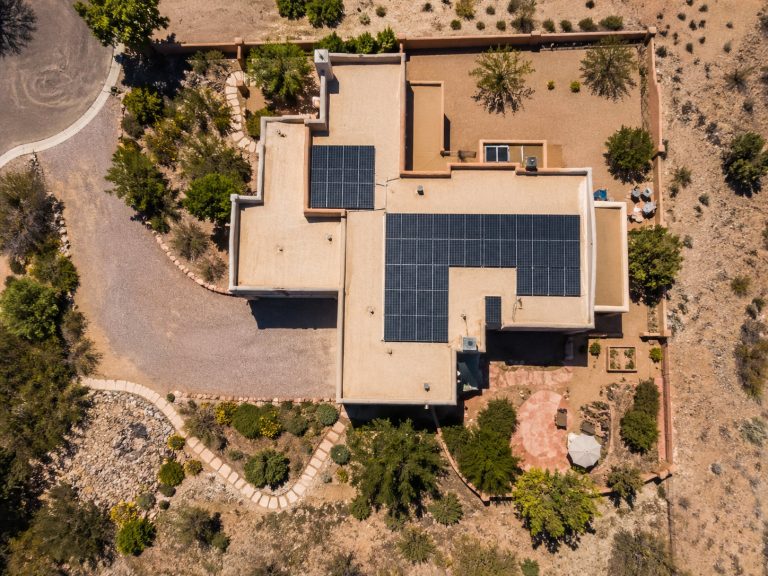
Large, simple roof planes usually lead to cleaner solar designs. They allow straighter rows, fewer interruptions, and better use of the roof.
Small broken-up sections are harder to justify. Two panels above a dormer, a short row beside a vent, and another panel near a ridge may increase the system size on paper. The real question is whether those panels add meaningful production.
Leave Space Around Obstructions
Good positioning respects the roof as it actually exists. Panels should not be forced into every gap just because there is a rectangle of roof showing.
That does not mean every vent or skylight ruins the design. It means the best roof areas should be used first. Smaller, awkward sections should only be included when the production estimate supports them.
Fewer Good Panels Can Outperform More Bad Ones
A smaller system on the best roof planes can outperform a larger system that includes weak panels. This is one of the easiest quote traps to miss.
Two proposals may show similar system sizes, but one might use clear south and west roof faces while the other fills shaded east and north sections. Without a production breakdown by roof plane, the weaker layout can hide behind a larger wattage number.
Practical Decision Criteria
Choose the Best Sun-Space Mix
The best roof plane has the strongest mix of sunlight, direction, pitch, and usable space. A large, clear west-facing roof can be more valuable than a small south-facing section crowded by vents and shade.
Start by ranking the roof planes. Put panels on the strongest areas first. Add weaker areas only when they produce enough annual kilowatt-hours to justify the added equipment.
Compare Annual kWh
Annual kilowatt-hours matter more than panel count. Panel count tells you how many modules are on the roof. Annual kWh tells you what the system is expected to do.
When comparing quotes, ask whether the production estimate reflects the actual proposed layout. If the proposal only shows system size in kilowatts, it is missing the number that matters most for this topic.
Ask for Production by Roof Plane
A strong proposal should explain which roof plane produces what. This is especially important when panels are split across several directions.
Ask for production by array, roof face, or group of panels. If shaded or north-facing panels are included, ask what those panels contribute on their own. That question often exposes weak parts of the layout.
Check the Roof Direction Mix
The direction mix should make sense for the roof and the home. A south-heavy layout may be best for annual production. A west-heavy layout may fit afternoon-heavy usage. An east-west layout may be the most practical way to use clean roof space.
Multiple directions are not the problem. An unexplained layout is the problem.
- Ask for annual kWh, not just system size.
- Check the panel map against trees, vents, dormers, and chimneys.
- Ask which roof plane produces the most electricity.
- Question panels placed on shaded or north-facing sections.
- Compare production per panel when quotes look similar.
Common Positioning Mistakes
Assuming South Is Always Best
South-facing roof space is often the right starting point. It is not always the right ending point.
Shade can change the answer fast. If a shaded south-facing roof plane is used only because “south is best,” the homeowner may pay for panels that underperform compared with a cleaner east or west roof face.
Filling Every Roof Section
Some designs try to use every available patch of roof. That should make a homeowner pause.
This usually happens when a proposal is built around system size or offset percentage instead of production quality. The result can be low-yield panels that increase cost, complicate the roof layout, and add less electricity than expected.
Ignoring Afternoon Usage
Annual production is important, but timing can also matter. A home with heavy late-day cooling, cooking, or charging may benefit from some west-facing production.
That does not make west better in every case. It means roof positioning should account for both total output and when that output arrives.
Letting Obstructions Shape Rows
Obstructions should be managed, not allowed to control the whole design. When vents, skylights, and dormers chop the layout into odd little groups, production quality can suffer.
The issue is not just appearance. Broken-up layouts can place panels closer to shade sources, reduce useful roof access, and create uneven production across the array.
Comparing Quotes Without Layouts
Two solar quotes with the same system size can have very different roof positioning. One may use the best roof planes. The other may rely on weaker sections to reach the same wattage.
This is where homeowners need to slow down. Do not compare proposals only by price, wattage, or offset percentage. Compare the panel map and the production estimate together.
| Mistake | Why it happens | Likely consequence | Financial risk |
|---|---|---|---|
| Choosing shaded south roof space | South is treated as automatically best | Lower production than expected | Paying for low-yield panels |
| Filling every roof fragment | Proposal focuses on system size | Uneven or weak production | Longer payback on marginal panels |
| Ignoring annual kWh | Panel count is easier to compare | Poor quote comparison | Buying a larger but weaker layout |
| Skipping shade review | Roof looks clear at one time of day | Seasonal or time-based losses | Overstated savings estimate |
The costly mistake is not always choosing solar. It is approving a roof layout that makes the numbers look better than the production will be.
When Non-Ideal Roofs Still Work
East and West Can Be Productive
East- and west-facing roofs can still be solid solar candidates when they are open and mostly unshaded. The common 10% to 20% production penalty compared with ideal south-facing panels is an estimate, not a dealbreaker.
Available roof area often changes the decision. A large, clean west-facing plane may support a better system than a tiny south-facing section with shade and obstructions.
Mixed Planes Smooth Production
Mixed roof planes can spread production across the day. East-facing panels start earlier. West-facing panels carry later.
That can be useful when a home uses electricity at different times. The design still needs to be modeled, but mixed orientation is not a defect by itself.
Large East-West Can Beat Small South
A larger east-west design can sometimes produce more total electricity than a smaller south-only design. The label on the roof direction is less important than the modeled output.
Ask to see layout options when the roof is not obvious. A south-only option, a south-plus-west option, and an east-west option may show which design actually performs best.
Questions for Your Installer
Which Plane Produces Most?
Ask which roof plane produces the most annual electricity. The answer should be specific.
If the design uses several roof faces, the installer should be able to explain the job of each one. The strongest roof plane should not be a mystery.
How Much Output Is Lost?
Ask how much output is being lost to shade, tilt, and direction. Some loss is normal. Hidden or unexplained loss is the concern.
Production models can include many loss factors, but for roof positioning the big ones are shade, orientation, pitch, and usable layout area. Keep the conversation focused there.
Are Panels Added for Size?
Ask whether any panels were added mainly to increase the system size or offset percentage. This matters when the layout includes shaded, north-facing, or awkward roof sections.
A few weak panels can make the quote look more complete while adding little production. That is not a bargain. It is just a larger design with marginal output.
Can Layout Be Improved?
Ask whether the layout can be adjusted to improve production per panel. Sometimes moving panels away from shade or shifting them to a cleaner roof plane improves the design without increasing system size.
A good installer should be able to explain the tradeoff. If the only answer is “this is what fits,” ask for the production assumptions behind that layout.
FAQ
What is the best roof direction?
For most US homes in the Northern Hemisphere, the best roof direction is usually an unshaded south-facing roof plane. That said, shade, roof size, and obstructions can make an east- or west-facing plane the better real-world option.
Do panels have to face south?
No. South-facing panels are often strongest for annual production, but east- and west-facing panels can still perform well. A clean east or west roof plane may beat a shaded or cramped south-facing section.
Is an east-west layout bad?
No. An east-west layout can be a smart design when it uses more clean roof area and spreads production across the day. Judge it by modeled annual kilowatt-hours and production timing, not by direction alone.
How much does shade matter?
Shade can matter a lot, and it can outweigh a modest direction or tilt difference. Trees, chimneys, dormers, and nearby rooflines can reduce production, especially when shade crosses panels during strong sun hours. Any shaded layout should be modeled before approval.
Does roof pitch matter most?
No. Roof pitch matters, but it is rarely the only deciding factor. Many pitched roofs from about 15 degrees to 40 degrees can support productive solar. Shade, usable roof area, and orientation often have more practical impact than chasing a perfect tilt angle.