
Solar Panel Alignment Guide
Quick Answer
The Best Alignment Is South-Facing, Low-Shade
For most U.S. homes in the Northern Hemisphere, the best solar panel alignment is a south-facing roof plane with very little shade and a roof pitch that does not push the panels into an extreme angle. As a practical benchmark, east- or west-facing roof planes often produce about 10% to 20% less annual electricity than a strong south-facing layout. That does not make them bad. It means they need to be modeled honestly. The real constraint is the roof itself. Dormers, chimneys, vents, trees, hips, valleys, and fire setbacks can make the “best” direction unusable. The decision is not just which way the roof faces. It is which roof plane will produce the most usable annual kWh once direction, tilt, shade, and available space are all counted.
Why True South Usually Produces Most
True south is usually the first direction checked because it gives the most balanced sun exposure across the year. For a fixed rooftop system, that often means the strongest annual production.
But south-facing does not automatically mean good. A clean southwest roof can beat a shaded south roof. A southeast plane with open sun can be better than a south plane chopped up by dormers and vent pipes. Most people miss this part because they judge the roof from the street, not from a production model.
The word “true” matters too. A phone compass may point to magnetic south, not true south. For a quick homeowner check, that may be close enough. For a real proposal, the azimuth should be based on accurate roof mapping, not a casual compass reading.
When East-West Still Works
East- and west-facing panels get dismissed too quickly. They usually do not produce as much annual electricity as an ideal south-facing array, but the drop is often manageable. A typical range is about 10% to 20% less annual production, depending on roof pitch, shade, latitude, and local sun conditions.
East-facing panels produce earlier in the day. West-facing panels produce later. That timing can matter. A house with heavy afternoon air-conditioning use may get real value from west-facing production even when the total annual kWh is lower than a south-facing layout.
Why Shade Can Matter More
Shade can ruin a good alignment. A chimney, tree, dormer, vent stack, or neighboring building can take a solid roof plane and turn it into a mediocre one.
This is where problems usually start: the roof faces the right way, so everyone assumes it will produce well. Then the system gets built around an area that loses sun during the best production hours. Direction matters. Shade can matter more.
What Solar Panel Alignment Means
Azimuth: The Compass Direction
Azimuth is the direction the panels face. In plain terms, it is the compass heading of the roof plane. South is usually the strongest annual-output direction in the Northern Hemisphere. Southeast and southwest are often close behind. East and west can work. North is usually the weak side of the roof.
If a solar quote does not show or explain azimuth, that is a problem. A proposal that only lists panel count and system size is leaving out one of the main drivers of production.
Tilt: The Panel Angle
Tilt is the angle of the panels. On most pitched roofs, the panels follow the roof slope. The installer is not usually building a separate angled frame on top of a normal sloped roof just to chase a perfect tilt.
A common planning rule is that fixed panels perform well when the tilt is close to the home’s latitude. In the field, plenty of residential roofs still perform well in a broad 15° to 40° range when the direction is decent and the shade is low. If the tilt is far from useful for the site, production can fall. A practical estimate for tilt-related loss is often in the 5% to 20% range, but it depends heavily on the roof and location.
Roof Plane: Each Side Differs
A roof plane is one continuous face of the roof. A simple gable roof may have two main planes. A complicated roof may have several small surfaces broken up by hips, valleys, dormers, skylights, vents, and chimneys.
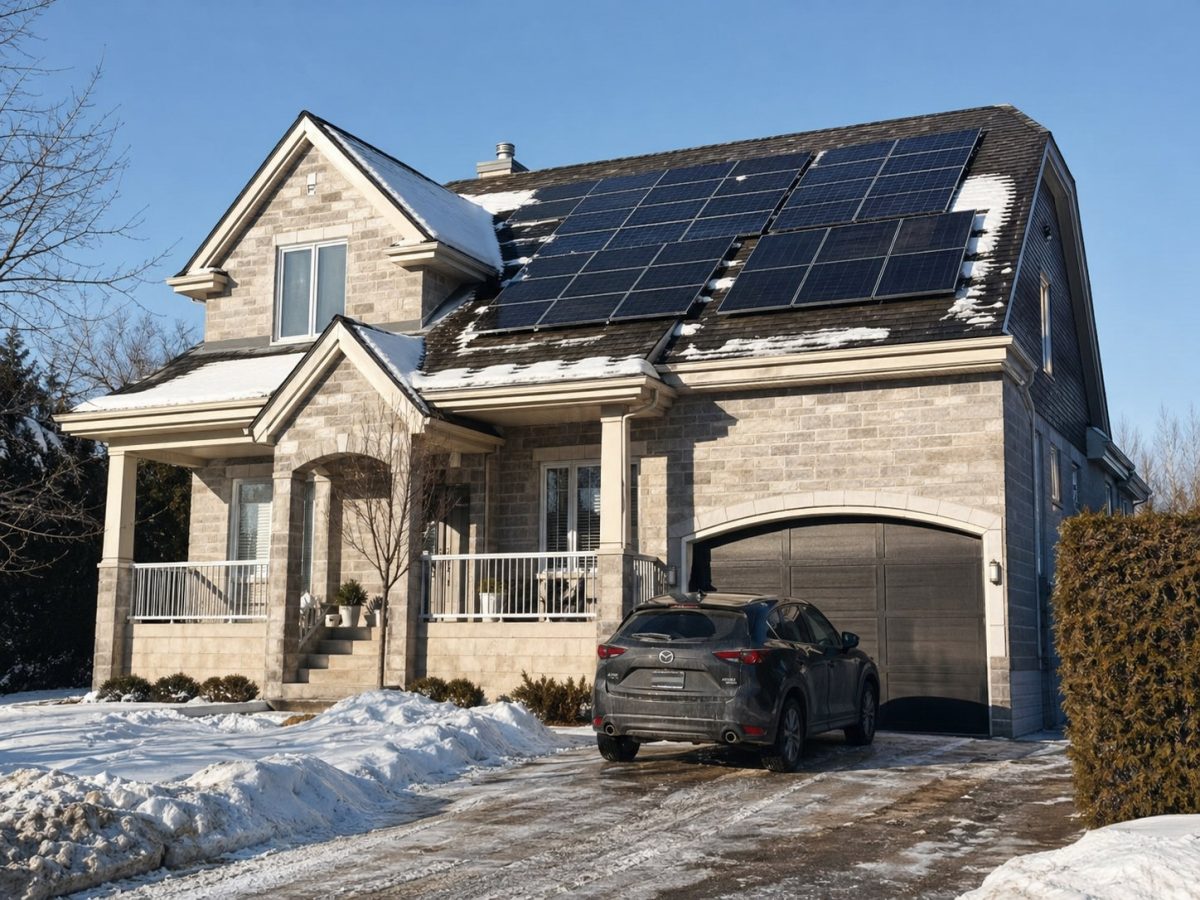
Each plane should be treated as its own production area. One may face southwest with clean sun. One may face east with tree shade. One may face north and barely earn its place in the design. Modeling the whole roof as if it has one direction is a shortcut, and shortcuts create bad estimates.
Layout: Spacing, Rows, and Obstructions
Layout is where the design becomes real. It is the actual placement of panels around roof edges, ridges, setbacks, vents, skylights, chimneys, and shade zones.
More panels do not always mean a better system. A smaller array on a clean roof plane can outperform a larger one that spills onto weak or shaded sections. That sounds obvious, but it gets missed in quote comparisons all the time.
Best Direction by Roof Orientation
Use the table below as a planning guide, not a guarantee. The actual result depends on roof pitch, shade, local solar conditions, and how honestly the system is modeled.
| Roof orientation | Typical production outlook | Best use case | Main caution |
|---|---|---|---|
| South | Strongest annual-output baseline | Main roof plane for many homes | Still needs a shade check |
| Southeast | Often slightly below ideal south | Morning-leaning production | May give up some afternoon output |
| Southwest | Often slightly below ideal south | Afternoon-leaning production | Late-day shade can hurt it |
| East | Often about 10% to 20% below ideal south | Morning production or limited south roof | Lower late-day output |
| West | Often about 10% to 20% below ideal south | Afternoon use or time-of-use value | Lower morning output |
| North | Often about 30% to 50% below south | Only when the model still supports it | Weak production and longer payback risk |
The takeaway: compare estimated annual kWh, not labels. “South” is not magic. “East-west” is not automatically bad. The roof plane that produces best after shade and usable area are included is the one that matters.
South-Facing Roofs
A south-facing roof is usually the first choice. If it is broad, open, and lightly shaded, it will often carry the strongest part of the system.
Still, do not stop there. A south-facing plane with afternoon tree shade or a chimney cutting across the array can disappoint. The roof needs a shade review across the day, not just a quick glance at noon.
Southwest and Southeast Roofs
Southwest and southeast roof planes are often very usable. They are close enough to south that production can stay strong, especially with a reasonable pitch and clean sun exposure.
Southeast leans toward morning output. Southwest leans toward afternoon output. That difference matters more when the home has time-of-use rates, late-day cooling load, or electric vehicle charging patterns.
East- and West-Facing Roofs
East- and west-facing roof planes are not failed solar areas. They are just different. They usually produce less total annual electricity than ideal south-facing panels, but they can still be worth using.
The common mistake is treating “not south” as a dealbreaker. It is not. A clean east-west roof with plenty of usable area may beat a cramped south-only design. The model should prove it either way.
North-Facing Roofs
North-facing roof planes need caution. In the Northern Hemisphere, they are usually the lowest-production option. A typical planning estimate is about 30% to 50% less production than a south-facing array, depending on roof pitch, location, and shade.
If a proposal uses north-facing panels, ask why. Then ask how much annual kWh those panels are expected to produce. If the answer is vague, the design may be chasing system size instead of useful energy.
Flat Roofs
Flat roofs give the designer more freedom because panels can be aimed with racking. That can be a benefit. It can also create new problems.
The big one is row spacing. Tilted rows placed too close together can shade each other, especially when the winter sun is low. A flat-roof layout should balance direction, tilt, spacing, usable area, wind exposure, and service access. A “perfect” angle is not perfect if it creates self-shading or cuts the panel count too far.
Best Tilt for Solar Panels
Tilt Near Your Latitude
For fixed solar panels, tilt near the home’s latitude is a common year-round target. It is a useful rule of thumb, not a law.
Most houses were not framed for solar math. On a pitched roof, the panel angle usually follows the roof pitch. That is normal. The important part is that the proposal uses the real pitch in the production estimate instead of a generic default.
Good Performance at 15°–40°
Many residential roofs perform well with panel tilt somewhere around 15° to 40°, assuming the roof direction is usable and shade is controlled. That range is broad for a reason. Local latitude, weather, roof direction, and seasonal sun all affect the result.
Do not obsess over tilt before checking shade and azimuth. A slightly imperfect tilt with clean sun is often better than a better tilt with recurring shade.
How Poor Tilt Cuts Output
When tilt is far outside a useful range for the site, production can drop. A reasonable industry estimate for tilt-related loss is about 5% to 20% in many poor-angle situations, but it should not be treated as a universal number.
The fix is not always custom racking. On a pitched roof, adding tilt hardware can complicate the installation and may not deliver enough extra production to justify it. The only useful answer is the modeled gain.
When Installers Follow Roof Pitch
On most sloped residential roofs, panels are mounted parallel to the roof. It is cleaner, simpler, lower profile, and usually the practical choice.
Custom tilt is more common on flat or low-slope roofs. On a normal pitched roof, it should be considered only when the production benefit is real and the roof design can support it cleanly.
Top Alignment Factors
Shade From Obstructions
Shade is not just a tree problem. Chimneys, dormers, vent pipes, roof ridges, parapets, and nearby buildings can all cast shadows. Some of those shadows move fast. Others sit on the same panel area during key hours.
Do not rely on a ground-level look. A proper design needs shade modeling or a careful site assessment. One shadow at the wrong time can do more damage than a small tilt mismatch.
Usable Roof Area
The best-facing roof plane may not have enough buildable space. Fire access paths, roof edges, hips, valleys, skylights, vents, and service clearances can reduce the area where panels can actually go.
This is why the panel layout matters. A quote should show where the panels land. Without that, the system size is just a number.
Morning vs Afternoon Production
Panel direction changes the shape of production during the day. East-facing panels wake up earlier. West-facing panels work later. South-facing panels usually concentrate production around the middle of the day.
For homes on time-of-use rates, that timing can affect savings. West-facing production may be more valuable in some utility territories if late-day electricity is expensive. That is not guaranteed. It depends on the actual rate plan.
Seasonal Sun Angle
Winter exposes weak designs. The sun is lower, days are shorter, and shadows stretch farther. A tree that barely matters in June can become a real problem in December.
This is why a single shade check on a sunny afternoon is not enough. The system needs to be judged across the year, not just on the day someone walks the property.
Local Climate and Solar Resource
The same roof can perform differently in Arizona than in Ohio. Cloud patterns, latitude, snow, haze, and regional solar resource all affect annual production.
Alignment should be modeled with local data. Tools such as PVWatts are useful for rough comparisons because they let you adjust location, system size, azimuth, tilt, and loss assumptions. For a contract decision, the installer’s production model should be more specific to the actual roof.
How Installers Calculate Alignment
Roof Mapping
Good alignment work starts with roof mapping. The installer needs to identify each usable roof plane, its direction, pitch, obstructions, and available panel area.
Satellite imagery can get close on simple roofs. Complex roofs need more care. If the roof has several small planes, dormers, trees, or odd angles, rough mapping can produce rough numbers.
Shade Analysis
Shade analysis should look at the sun path through the day and across seasons. The late-morning to midafternoon window often drives a lot of production, but east and west layouts also need morning and afternoon shade checked carefully.
A quick site walk may catch the obvious issues. It may miss the expensive ones. Tree growth, winter shadows, and small roof obstructions deserve more attention than they usually get.
Production Modeling With PVWatts
Production modeling turns roof alignment into estimated annual kWh. Inputs usually include location, system size, panel orientation, tilt, module assumptions, shade, and system losses.
A homeowner does not need to learn solar design software. But it is fair to ask what assumptions were used. If the proposal cannot explain azimuth, tilt, and shade, the annual production number is harder to trust.
Comparing Annual kWh
Annual kWh is the number to compare. System size tells you the rated capacity. Annual kWh tells you what the roof is expected to produce.
A 9 kW system on clean, well-aligned roof planes may outperform a larger system spread onto weak areas. Bigger is not always better. Better-located panels usually are.
Choosing the Best Layout
The best layout balances production, usable roof area, setbacks, shade, roof access, and equipment placement. It should not look like someone filled every blank space just to increase the system size.
When I review layouts, I look for panels added to weak roof planes just to make the system look larger. Those panels may add little useful production. Before accepting that kind of design, ask for estimated annual kWh by roof plane.
Practical Decision Criteria
Choose Sun Exposure First
Start with the roof area that gets the cleanest sun during productive hours. Good direction helps, but clean sun is what makes the panels work.
Prioritize Low-Shade Areas
Fix the shade question before worrying about a few degrees of tilt. A roof plane that is slightly off ideal but open to the sun is often stronger than a perfect-facing area with daily obstruction shade.
Use East-West When Needed
East-west layouts make sense when south-facing roof space is limited, shaded, or too fragmented. They can also spread output across more of the day.
The point is not to prefer east-west. The point is not to reject it automatically. Compare the modeled production and decide from there.
Avoid North-Facing Panels
North-facing panels should earn their place. They usually produce much less than better-facing roof planes, so they need a clear reason in the design.
Ask for kWh by Roof Plane
This is one of the best quote-review questions you can ask: how much annual energy is each roof plane expected to produce? If the installer cannot answer, the layout may not be ready for a serious comparison.
Common Alignment Mistakes
Alignment mistakes are easy to hide in a proposal. They usually show up later as disappointing production, weaker savings, or a system that looked impressive only because it had more panels.
| Mistake | Why it happens | Consequence | Financial risk |
|---|---|---|---|
| Judging by panel count | The quote highlights system size | Weak roof planes get filled | Lower kWh per installed watt |
| Ignoring shade | Direction gets all the attention | Peak-hour production drops | Lower savings than expected |
| Using north-facing space casually | The design chases a larger system | Annual output may be weak | Longer payback |
| Skipping roof-plane modeling | The estimate uses broad assumptions | Production is less reliable | Poor quote comparison |
| Packing flat-roof rows tightly | The design maximizes panel count | Rows shade each other | Winter output loss |
The cost of a bad alignment decision is usually not a separate line item. It is lost energy year after year. If the system produces less than expected, the savings case gets weaker every month.
Assuming South Always Works
South-facing is a strong start, not a pass. Shade, roof shape, and obstruction placement can turn a good-looking plane into a mediocre production area.
Ignoring Small Shade Sources
Small obstructions can create real losses if they shade panels during productive hours. Chimneys, dormers, vent pipes, and tree branches deserve attention before the layout is finalized.
Using the Wrong Roof Plane
The biggest open area is not always the best area. If it faces the wrong way or carries regular shade, filling it may make the system larger without making it much better.
Using Magnetic South
Magnetic south is fine for a rough look. It is not good enough for final design assumptions. A real proposal should use accurate azimuth data.
Comparing Size Without kWh
System size is rated in kW. Energy production is measured in kWh. For alignment decisions, kWh is the number that tells you whether the roof layout is doing its job.
Payback and Alignment
Lower Output Stretches Payback
This is not a solar cost article, but alignment affects payback. If two systems have similar installed costs and one produces less electricity because of shade or poor orientation, the weaker producer has a longer road to recover its cost.
Annual kWh Beats Panel Count
Panel count is easy to sell. Annual kWh is harder to fake. A good proposal should make the production estimate visible and explain why the roof layout supports it.
Smaller Can Beat Larger
A smaller system on strong roof planes can be a better design than a larger system spread across low-value sections. Extra panels are not helpful if they spend decades producing mediocre energy.
Solar Panel Alignment Checklist
- Confirm which roof planes face south, southeast, southwest, east, west, and north.
- Check shade from trees, chimneys, dormers, vents, ridges, and nearby buildings.
- Ask whether each roof plane was modeled with its own azimuth and tilt.
- Compare estimated annual kWh, not just system size or panel count.
- Review flat-roof spacing so tilted rows do not shade each other.
- Ask for a clear reason before accepting north-facing panels.
Confirm Roof Directions
Use satellite imagery, installer software, or a corrected compass reading to confirm roof direction. Do not trust a street-view guess.
Check Shade From 9 to 3
The 9 a.m. to 3 p.m. window is a useful screening period because it captures much of the productive solar day. Shade outside that window can still matter, but shade during those hours deserves special attention.
Note Roof Obstructions
Write down chimneys, skylights, vents, dormers, ridges, valleys, and nearby trees. These details decide where panels can actually fit.
Ask for Production Estimates
A layout image is not enough. Ask for estimated annual production tied to that layout. If the array uses several roof planes, ask how each section contributes.
Compare Layouts by kWh
When comparing quotes, put annual kWh next to system size. A design with fewer panels but better alignment may be the stronger roof solution.
FAQ
What is the best direction for solar panels?
For most U.S. homes in the Northern Hemisphere, true south is usually the best direction for maximum annual production. Southeast and southwest can also work well when shade is low. East and west are often viable too, though they commonly produce about 10% to 20% less than an ideal south-facing layout.
Is east-west solar alignment worth it?
It can be. East-west alignment is common when south-facing roof space is limited, shaded, or broken into small sections. The right way to judge it is by estimated annual kWh and bill value, not by direction alone.
How much production is lost without south-facing panels?
As a practical planning range, east- or west-facing panels often produce about 10% to 20% less annual electricity than ideal south-facing panels. North-facing panels can be much weaker, often about 30% to 50% lower depending on roof pitch, location, and shade.
Is tilt more important than direction?
They both matter, but they should be evaluated together. A decent tilt with clean sun can beat a better tilt with daily shade. In many residential designs, shade and azimuth cause bigger production swings than a modest tilt difference.
Can panels work on a shaded or north-facing roof?
They can produce electricity, but the real question is whether they produce enough to justify the space and cost. Shaded or north-facing roof planes should be modeled carefully. If the proposal does not show realistic production assumptions, those panels may be adding system size without adding much useful energy.


