Do Solar Panels Really Cool Your Roof?
Quick Answer
Yes, solar panels can cool your roof. In one well-known rooftop study, the ceiling area below solar panels measured about 5°F cooler during the day than a comparable exposed roof area, and the covered roof area received roughly 38% less heat. That does not mean the room below will automatically feel 5°F cooler. Insulation, attic ventilation, roof coverage, panel clearance, and climate all affect the result. The practical answer is this: roof cooling is a real side benefit of rooftop solar, but it should not be the main reason you buy a system.
How Solar Panels Cool a Roof
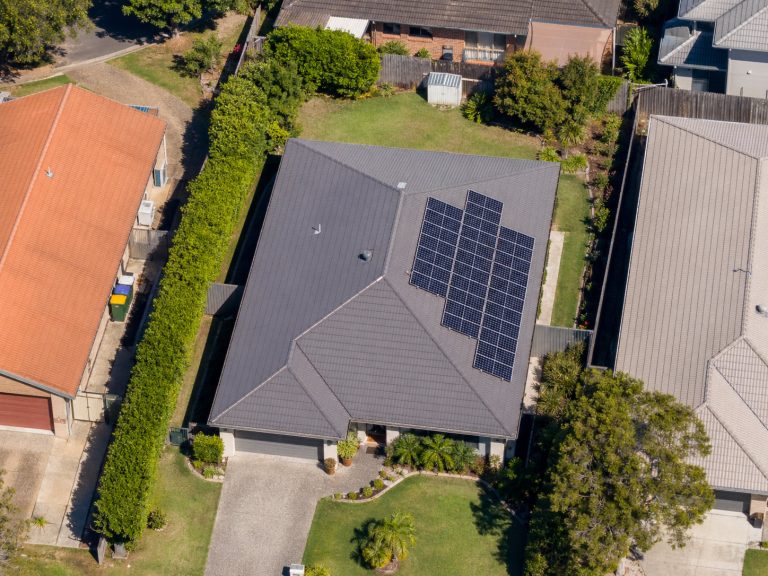
Solar panels cool a roof by blocking direct sunlight before it hits the roofing surface. That is the core mechanism. The panels take the sun first. Some of that sunlight becomes electricity, some reflects away, and some turns into heat at the panel. The shingles, tiles, metal roof, or membrane below get less direct solar exposure.
That does not make the roof cold. A dark roof on a sunny summer afternoon can get extremely hot, often well above the outdoor air temperature. Solar panels reduce that heat load on the covered sections. They do not change the weather, and they do not cool the roof areas they do not cover.
Panels Shade the Roof Surface
The biggest cooling benefit is shade. A rooftop solar array acts like a raised shade structure. The roof below the panels is no longer baking in full sun for the same number of hours.
This matters most on roof planes that take hard afternoon sun. West and southwest roof areas can build a lot of heat late in the day, right when the house is already warm and the air conditioner is working harder. If solar panels cover that area, the roof deck below usually sees less heat stress.
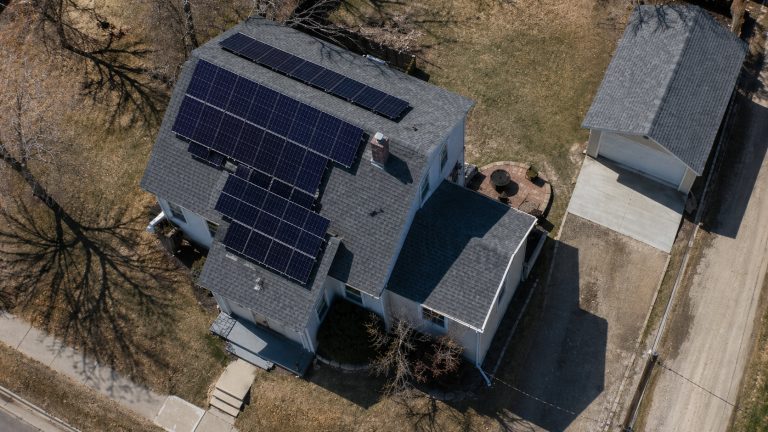
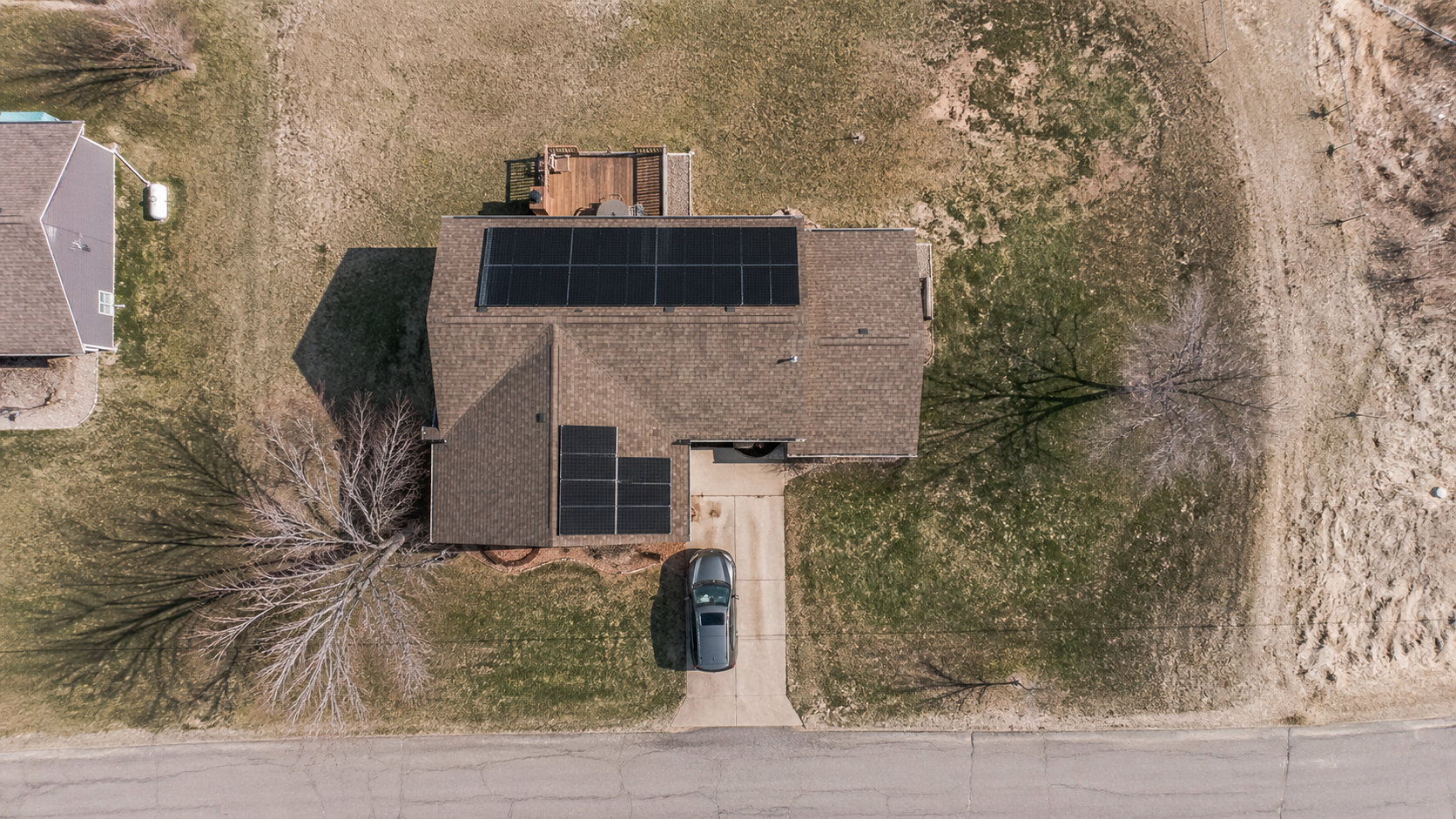
The benefit is local. Panels over the garage do not cool the bedroom wing on the other side of the house. Panels over one roof plane do not cool every roof plane. This is where people get the wrong idea. Solar panels can cool covered roof areas. They do not wrap the entire house in shade unless the layout actually covers the right areas.
Airflow Under Panels Matters
The gap under the solar panels matters more than many homeowners realize. Heat collects behind the modules. If there is room for air to move, that hot air can escape. If the panels sit very tight to the roof, more heat can stay trapped in that cavity.
In real-world conditions, tilted or rail-mounted systems usually have better airflow than very low-profile arrays. The cooling effect is not just about shade. It is shade plus air movement.
From a roof-systems perspective, the air gap is not a small detail. A shaded roof with hot air trapped above it will not behave the same as a shaded roof with decent airflow under the modules.
Panels Can Cut Roof Heat 38%
One commonly cited rooftop study found that solar panels reduced the amount of heat reaching the roof by about 38% under the measured conditions. That is a roof heat-transfer figure. It is not the same thing as a 38% reduction in your air-conditioning bill.
That distinction matters. Your cooling bill is affected by windows, insulation, ductwork, thermostat settings, attic leakage, HVAC sizing, humidity, and daily behavior. Roof heat is one piece of the load, not the whole load.
Still, a reduction of that size at the covered roof surface is meaningful. It confirms what contractors see in the field: solar panels can work like a passive shade layer over the roof while also producing electricity.
Ceilings May Be 5°F Cooler
The same research reported that the ceiling area below the solar array measured about 5°F cooler during the day than the ceiling below an exposed roof area. That is a useful number because it moves beyond roof surface temperature and gets closer to what a homeowner might actually care about.

Use that number carefully. It does not mean every room under panels will be 5°F cooler. The result depends on the roof assembly, attic space, insulation, ventilation, panel layout, weather, and the way the home is built. In some homes, the difference may be noticeable. In others, the roof is cooler but the living space barely changes.
What “Cool Your Roof” Means
“Cool your roof” can mean several different things. It might mean the roofing material is cooler. It might mean the attic runs cooler. It might mean the rooms below feel cooler. Those are connected, but they are not the same outcome.
| Cooling Claim | What It Actually Measures | What Homeowners Should Expect |
|---|---|---|
| Cooler roof surface | Temperature of the roof material below or near the panels | Most direct and likely benefit |
| Cooler attic | Air temperature or surface temperature inside the attic | Possible, but depends on insulation and ventilation |
| Cooler rooms | Indoor comfort in living spaces | Not guaranteed; HVAC and building envelope matter |
| Lower AC bill | Whole-home cooling energy use | Possible but difficult to isolate from solar electricity savings |
The clean way to think about it is this: rooftop solar affects the roof first. It may affect the attic. It may affect the rooms. Each step away from the roof adds more variables.
Roof Temperature Is Not Room Temperature
A roof can run cooler under solar panels while the room below feels almost the same. That is not a failure of the solar panels. It is how heat transfer works.
Heat has to move through the roof deck, attic air, insulation, ceiling materials, and room air before someone feels it. In a poorly insulated home, the change may be more noticeable. In a tight, well-insulated home, the panels may reduce roof heat without creating a dramatic comfort change indoors.
Attic Temperature Depends on Assembly
Attics are not all built the same. A vented attic with decent insulation behaves differently from a sealed attic. A low-slope roof with little cavity space behaves differently from a steep roof over a deep attic. Ductwork location matters too.
That is why solar should not be treated as a guaranteed attic-cooling fix. If the attic is hot because vents are blocked, insulation is thin, or air is leaking from the house into the attic, panels can reduce some roof heat but still leave the main problem untouched.
Cooler Roofs May Not Cool Bedrooms
Hot bedrooms get blamed on the roof all the time. Sometimes that is fair. Sometimes it is not. The real cause could be west-facing windows, poor return air, weak duct delivery, missing insulation, closed doors, or air leaks around ceiling penetrations.
If solar panels are installed over that room, they may reduce the roof heat above it. But if the room is hot because of airflow or insulation problems, the panels will not magically fix it. That is the part homeowners need to separate before spending money.
When Cooling Is Most Noticeable
The cooling effect is strongest when the roof gets strong sun, the panels cover a meaningful area, and roof heat has a clear path toward the living space. It is weaker when the array is small, the home is already well insulated, or the comfort complaint is not really a roof-heat problem.
Hot, Sunny Roofs Benefit More
Solar roof cooling matters more in hot, sunny climates. A roof in inland California, Arizona, Nevada, Texas, Florida, or the Southeast has more heat to block than a roof in a mild coastal or northern climate.
The roof plane matters too. South-facing areas usually matter for production. West-facing areas can matter for late-day heat. A good solar design does not chase cooling at the expense of production, but it should recognize which roof areas are taking the hardest sun.
Weak Insulation Shows More Effect
A home with weak attic insulation may show a larger comfort change after solar panels go on, because more roof heat was getting into the house before. That does not make solar a substitute for insulation. It just means the roof shading has fewer layers blocking its effect.
If comfort is the real problem, the attic still needs its own look. Air sealing, insulation depth, duct leakage, and ventilation can matter as much as, or more than, the solar array above the roof.
Single-Story Homes Feel It More
Single-story homes often have a lot of roof area compared with their living space. That makes roof heat more important. A broad ranch-style home with a large exposed roof may see more practical benefit than a two-story home with less roof area per conditioned square foot.
This same idea explains why large flat commercial roofs can benefit from rooftop solar shading. Big exposed roof surfaces absorb a lot of heat. Covering a meaningful section with PV can reduce the heat load on that roof area.
Tilted Panels Usually Cool Better
Tilted panels, or panels with more open clearance, usually allow better airflow. Moving air carries heat away from the space between the panels and the roof. Flush-mounted systems still provide shade, but they may not move heat away as effectively.
This does not mean the entire system should be designed around cooling. Production, wind rating, roof attachments, code setbacks, manufacturer rules, and appearance all matter. But if two designs are otherwise sound, the one with better airflow under the array usually has the stronger roof-cooling profile.
Solar Panels Versus Cooling Options
Solar panels are one way to reduce roof heat. They are not the only way. Cool roofs, insulation, and attic ventilation all deal with heat differently. Mixing them up leads to bad expectations.
Solar Panels Versus Cool Roofs
A cool roof is meant to reflect sunlight and absorb less heat. Solar panels work by shading the roof and producing electricity. Covered roof sections get shade. Uncovered roof sections still behave like the roof material underneath.
| Option | Main Function | Best Use | Main Limitation |
|---|---|---|---|
| Solar panels | Shade roof and generate electricity | Homeowners who want power production with cooling as a bonus | Cooling limited to covered roof areas |
| Cool roof | Reflect sunlight from the roof surface | Heat-control projects where electricity is not the goal | No electricity production |
| Both together | Reflect exposed areas and shade covered areas | Hot climates with large roof heat loads | Requires roof-specific design and material compatibility |
The takeaway is practical. If you want electricity, solar is the stronger tool. If you only want a cooler roof surface, a cool roof may be the more direct option. They overlap, but they are not the same solution.
Solar Panels Versus Insulation
Solar panels reduce heat before it hits the roof. Insulation reduces heat moving from the attic or roof assembly into the living space. Those are separate jobs.
If the house has hot rooms, insulation may deliver more comfort than solar shading alone. If the house already has strong insulation, rooftop solar may still cool the roof surface while making only a small difference indoors. The strongest setup is usually roof heat reduction above and a good thermal boundary below.
Solar Panels Versus Ventilation
Attic ventilation helps move heat and moisture out of a vented attic. Solar panels reduce some heat entering from above. One does not automatically replace the other.
If soffit vents are blocked or the attic ventilation is poorly balanced, solar panels will not correct that. They can lower the heat load on covered roof areas, but the attic still needs to function properly as part of the roof system.
Practical Decision Criteria
For homeowners comparing solar quotes, the cooling question should shape expectations. It should not override the core design questions: production, roof condition, layout, attachment method, utility rules, and workmanship.
Buy Solar for Electricity First
The main reason to install rooftop solar is electricity production. Roof cooling is a useful side benefit. It is usually not strong enough, by itself, to justify the project.
Be careful with any sales claim that turns roof cooling into guaranteed AC savings. It is fair to say panels reduce roof heat. It is risky to promise a specific cooling-bill reduction unless someone has modeled the actual home.
Use Cooling as a Bonus
Roof cooling can be a legitimate tie-breaker. If rooftop solar already makes sense for production, utility rates, roof layout, and roof condition, the passive cooling effect adds another benefit. It may reduce heat stress on covered roof areas and lower some heat transfer into the attic.
But if the only problem is a hot upstairs room, start with the building first. Check insulation, air leaks, duct delivery, attic ventilation, window heat gain, and HVAC balance. Solar may help, but it may not be the first fix.
Ask About Height and Airflow
You do not need to become a racking engineer. You should still ask how the panels sit above the roof. A competent installer should be able to explain the mounting method, approximate clearance, and whether the layout allows airflow below the modules.
- Ask whether the panels are flush-mounted or raised on rails.
- Ask whether airflow under the array is blocked by design details.
- Ask which roof planes will be covered by the array.
- Ask whether the hottest rooms are actually beneath panel-covered areas.
- Ask whether the design prioritizes production, aesthetics, or roof coverage.
These are not trick questions. They help you avoid a common mistake: assuming every rooftop solar design provides the same roof-cooling benefit.
Cover Hot Areas Only When Logical
It can make sense to cover a hot roof area, but only if that roof area also works for solar. The panel location still has to make sense for sunlight, attachments, setbacks, wiring, code clearance, and long-term service access.
Do not accept a weak solar layout just because it shades a hot room. If the location has poor sun exposure or design conflicts, the system may lose too much production value. Cooling should support the design. It should not force a bad one.
Risks, Mistakes, and Limits
The main risk is not that solar panels fail to cool the roof. The main risk is expecting the wrong kind of cooling. A cooler roof surface is one thing. A cooler home is a bigger building-performance question.
Mistake: Expecting Attic Fixes
One of the biggest mistakes is treating rooftop solar like an attic repair. If the attic has thin insulation, air leakage, poor ventilation, or duct problems, panels may reduce heat from above while the real comfort issue remains.
The financial risk is straightforward. A homeowner may buy solar expecting the house to feel cooler, then still need insulation, duct sealing, air balancing, or ventilation work. That does not mean solar was useless. It means the system was expected to solve the wrong problem.
Mistake: Expecting Every Room Cooler
Solar panels cool the roof areas they cover. They do not cool the whole roof equally. They also do not deliver conditioned air into the living space.
This matters when buying a home with solar already installed. If someone says, “The solar keeps the house cooler,” look at where the panels are. Panels over a garage may not help a hot bedroom on the opposite side of the home.
Limit: Winter Shading Effects
In winter, roof shading is not always a pure benefit. On cold sunny days, an exposed roof can absorb some solar warmth. Panels reduce that warming on covered sections.
In a well-insulated home, the indoor effect may be minor. Still, it is part of the physics. The roof-cooling benefit is strongest in hot, sunny, cooling-heavy conditions. It should not be described as an all-season comfort upgrade everywhere.
Limit: Poor Airflow Reduces Benefit
If air cannot move under the panels, heat can build up between the module and the roof. The roof still gets shade, but the airflow benefit is weaker.
Some low-profile designs are used for valid reasons, including wind exposure, roof geometry, manufacturer rules, and appearance. The point is not that every array must sit high above the roof. The point is that clearance and airflow affect the cooling result.
Limit: Ground Mounts Do Not Help
Ground-mounted solar can be a good choice for production, roof preservation, or service access. It just does not cool the roof.
If roof-cooling benefit is part of the decision, the panels need to shade the roof area in question. A ground-mounted array may still be the better solar design, but it should not be credited with lowering roof temperature.
What This Means for Your Decision
The balanced answer is simple. Solar panels can cool covered roof areas. They can reduce heat transfer into the roof assembly. They may help attic and room temperatures in some homes. But they are not a dedicated cooling system.
Cooling Is Real but Secondary
The measured data supports the basic claim: solar panels can reduce heat reaching the roof, and ceiling areas below an array can run cooler than similar exposed areas. The commonly cited figures are about 38% less heat reaching the roof and about a 5°F cooler ceiling area under test conditions.
Those numbers are useful, but they have limits. They support a roof-cooling claim. They do not support blanket promises about room temperature, AC bills, or whole-house comfort.
Combine Solar With Envelope Fixes
If indoor comfort is the actual concern, evaluate the building envelope too. Insulation, air sealing, attic ventilation, duct leakage, and window heat gain can all affect whether a home feels hot.
For quote comparison, keep the scopes separate. Ask the solar contractor about panel coverage, airflow, and layout. Ask an insulation, HVAC, or building-performance professional why the home is overheating. Those questions overlap, but they are not the same trade.
Consider Cool Roofing Separately
If the main goal is a cooler roof, a cool roof or reflective roof coating may be a more direct tool. If the main goal is electricity production with a roof-cooling side benefit, rooftop solar fits better.
In hot climates, the two strategies can sometimes work together. Panels shade the covered areas. Reflective roofing helps exposed areas reject sunlight. Whether that makes sense depends on the roof material, roof age, climate, and replacement timing.
FAQ
Do solar panels make your attic cooler?
They can, but not in every home. Solar panels reduce heat reaching the covered roof area. That can lower some heat entering the attic. The effect is usually stronger when the roof gets heavy sun, the panels cover a large area, and the attic has limited insulation. A well-insulated, well-ventilated attic may show a smaller change.
Do solar panels cool your house?
They may help reduce heat coming through the roof, but they do not cool the house like an air conditioner. Indoor comfort depends on insulation, ductwork, windows, attic conditions, air leakage, and HVAC performance. Solar can help with roof heat, but it does not replace those systems.
Do solar panels cool the roof at night?
Not necessarily. During the day, panels shade the roof and reduce solar heat gain. At night, they can also slow some heat release from the roof because they partially cover it. The strongest cooling benefit is daytime shading in hot, sunny conditions.
Are solar panels better than a cool roof?
They are built for different jobs. Solar panels generate electricity and shade the roof areas they cover. A cool roof reflects sunlight from the roofing surface. If electricity production is the main goal, solar is the better fit. If roof-temperature reduction is the only goal, a cool roof may be more direct.
Can panels extend shingle life?
They may reduce heat exposure and daily temperature swings on the covered sections of roof. That can reduce thermal stress. But there is no universal, reliable number for how many extra years panels add to shingle life. Treat it as a possible roof-protection benefit, not a guaranteed lifespan extension.