Can Solar Panels Help Protect Your Roof?
Quick Answer
Yes, solar panels can protect the part of your roof they cover. They can also create roof problems if the roof is weak or the installation is sloppy. In normal conditions, panels act like a raised shield over shingles or roof membrane, blocking some direct sun, UV exposure, rain impact, and light debris. One roof heat-transfer study found ceiling temperatures under PV arrays were up to 2.5 K cooler than under exposed roof areas, which supports the idea that panels can reduce heat stress beneath the array. The catch is simple: the benefit only applies under the panels. Bad flashing, old shingles, soft decking, or existing leaks can turn the same solar project into a roof headache.
The real decision is not whether solar panels are “good” or “bad” for a roof. The real decision is whether your roof is ready for panels, and whether the installer knows how to mount them without compromising the roof system.
Do Solar Panels Protect Your Roof?
How Panels Shield the Roof
Solar panels can protect a roof in a limited, practical way. They sit above the roof surface, so the covered area takes less direct sun, less direct rainfall, and less direct contact from small debris. The panel glass gets the exposure first.
On asphalt shingles, the biggest benefit is shade. UV exposure and heat cycling are hard on shingles over time. A covered shingle is not aging in the same conditions as an exposed shingle sitting in full afternoon sun.
On low-slope roofs and membrane roofs, the same idea applies. Less direct sun can be helpful. But the membrane still has to be intact, sealed, and draining properly. A solar panel is not a patch, a coating, or a waterproofing layer.
What Protection Really Means
When people say solar panels protect a roof, they usually mean surface protection. That matters, but it has limits.
Panels do not strengthen rafters. They do not fix cracked flashing. They do not stop water that is already getting under shingles. They do not make bad drainage disappear. They simply reduce exposure on the roof area directly beneath the array.
That is useful protection. It is not a roof repair.
The 2.5 K Cooling Finding
A roof heat-transfer study from UC San Diego found that ceiling temperatures under solar photovoltaic arrays were up to 2.5 K cooler than under exposed roof sections. That is a useful data point because it supports what installers often see in the field: the roof area under panels is shielded from direct solar heating.
That does not mean every roof gets a guaranteed life extension. It also does not prove that every shingle under every array will last longer by a fixed number of years. The honest takeaway is narrower: panels can reduce heat exposure under the array, and lower heat exposure is generally easier on roofing materials.
Not a Roof Covering
A real roof covering is designed to shed water as a system. Shingles, underlayment, flashing, valleys, drip edge, vents, and roof membrane all have jobs. Solar panels sit above that system. They do not replace it.
This is where people get into trouble. They hear that panels protect the roof, then they install solar over shingles that are already brittle or over flashing that already looks tired. That is a bad trade. Solar may hide the problem for a while, but it does not cure it.
What Panels Protect Against
Sun and UV Exposure
The strongest roof-protection benefit is shade. Panels block direct sun from the roof surface under the array. That means less UV exposure and less direct heating on that covered section.
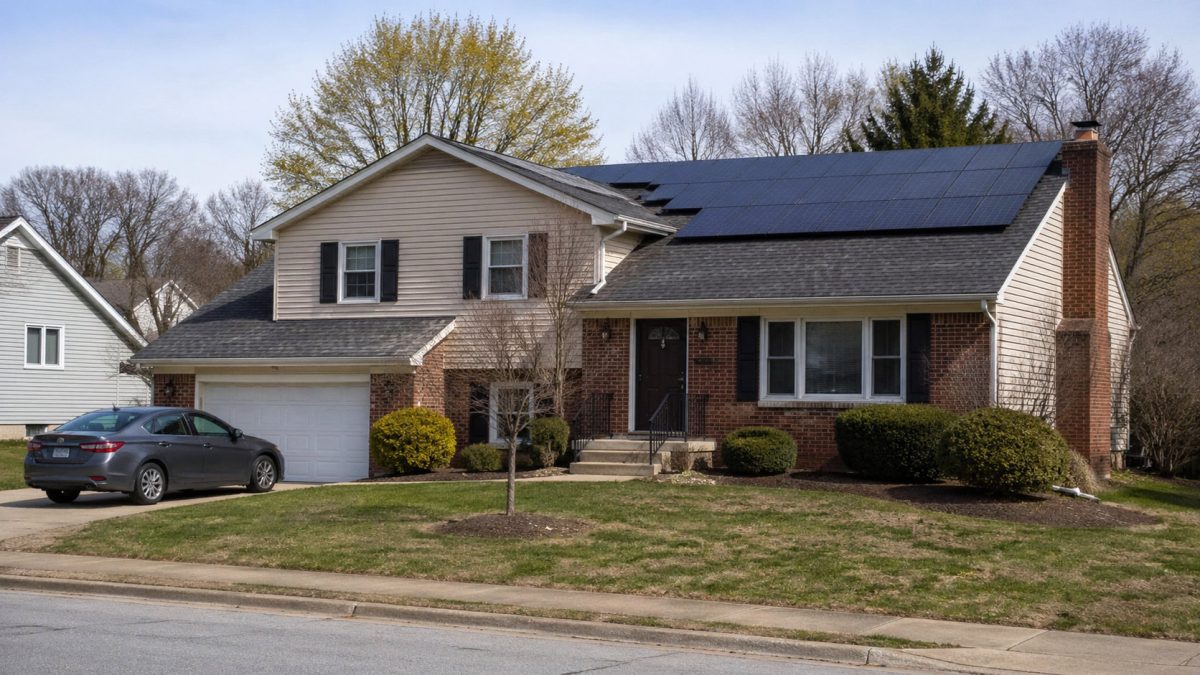
This matters most on roof planes that get heavy sun, especially south- and west-facing sections. Those areas tend to take more abuse from heat and sunlight than shaded or north-facing sections.
But the whole roof is not protected equally. The covered area may weather more slowly, while the uncovered sections keep aging at the normal rate.
Rain and Light Debris
Panels also reduce direct rain impact on the covered roof area. Rain still reaches the roof through gaps, wind-driven spray, runoff paths, and exposed sections, so this is not full rain protection. Still, the panel is taking some of the direct hit.
Light debris works the same way. Leaves, small twigs, pine needles, and roof grit may land on the panels or collect near rails instead of striking the roof surface below.
That can help the roof under the array. It can also create a maintenance issue if debris piles up at panel edges, valleys, or gutters. Protection and obstruction can happen at the same time.
Partial Hail Protection
Solar panels can give the roof below some protection from hail because the module is the first surface hit. But this is only partial protection.
Some module testing references use hail impacts around a 25 mm ice ball traveling at about 23 m/s. That tells you panels are built for outdoor exposure and impact resistance. It does not mean they are impossible to break. Severe hail can damage solar glass, frames, exposed flashing, and the uncovered roof around the array.
In hail areas, solar panels may protect the roof beneath them while becoming the damaged item themselves. That is still a repair problem.
Heat Cycling
Roofing materials expand and contract as temperatures rise and fall. That daily movement is part of normal roof aging. Panels can reduce that movement under the array by shading the surface from peak sun.
This benefit is strongest where the roof would otherwise bake in direct sunlight for hours. Less direct heat usually means less stress on the covered roof surface.
It does not eliminate roof movement. It just reduces one source of stress in one part of the roof.
Uncovered Roof Areas
Solar panels do nothing for the parts of the roof they do not cover. Edges, valleys, ridges, gutters, skylights, chimneys, plumbing vents, and exposed shingles still take the weather directly.
That matters because many roof leaks start at transitions and penetrations, not in the middle of a clean open shingle field. A solar array may protect the field area under the panels while the real weak point sits three feet away at a flashing detail.
Protection Versus Limits
The best way to think about solar roof protection is to split the claim into what is real, what is partial, and what is overstated.
| Roof Issue | Protection Level | What Panels Can Do | What Panels Cannot Do |
|---|---|---|---|
| UV exposure | Strong under the array | Block direct sunlight from covered roof areas | Protect uncovered shingles or flashing |
| Rain impact | Moderate under the array | Reduce direct rainfall on covered sections | Stop wind-driven rain or drainage problems |
| Heat stress | Moderate under the array | Reduce peak sun exposure and heat transfer | Prevent all thermal movement or roof aging |
| Hail | Partial | Take some impact before the roof below | Guarantee protection during severe hail |
| Existing leaks | None | May cover the area visually | Repair failed flashing, underlayment, or decking |
| Bad installation | Negative | No benefit if waterproofing is wrong | Prevent leaks from poor mounts or sealants |
The practical takeaway: panels can protect roof material from exposure, but they also add attachment points, flashing details, and access limits. The roof outcome depends less on the marketing claim and more on the actual roof condition and installation workmanship.
Strong Protection Cases
The best case is a newer, watertight roof with a properly flashed solar array over a high-sun roof plane. The roof is already doing its job. The panels reduce exposure. The installer does not compromise the waterproofing.
That is when the protection argument makes sense.
Partial Protection Cases
Hail, falling branches, heat stress, and wind-driven debris fall into the partial-protection category. Panels may shield the roof below, but the panel itself may take damage. The exposed parts of the roof remain exposed.
Partial protection is still useful. It just should not be sold as complete protection.
No-Protection Cases
Solar panels do not protect against rotten decking, failed underlayment, bad attic ventilation, old pipe boots, cracked chimney flashing, or existing leaks. Those are roof-system problems.
If a roof already shows water stains, soft spots, curling shingles, broken tiles, or recurring leak history, the roof needs attention before solar goes on. Covering a problem makes it harder to see. It does not make it go away.
Risk Cases
The biggest risk is poor workmanship. Missed rafters, sloppy drilling, incorrect flashing, cracked tiles, failed sealant, and weak attachments can all create roof damage that did not exist before solar.
A clean-looking array from the street does not prove the roof details are right. The important work is hidden under the panel, under the flashing, and at the fastener.
Main Roof-Damage Risks
Leaks From Poor Penetrations
Most solar-related roof leak problems come from the roof penetrations and flashing. On many pitched roofs, mounts need structural attachment into rafters or approved framing. That means drilling, fastening, sealing, and flashing have to be done correctly.
If the installer misses the framing, drills the wrong size hole, skips sealant, uses the wrong flashing, or forces the roof covering back into place, water can find a path in.
Good installation manuals are specific for a reason. They often call for locating structural members, drilling pilot holes, sealing or backfilling as directed, setting flashing under the correct shingle course, and tightening hardware to the required torque. Those details are not paperwork. They are what keep the roof dry.
From a contractor perspective, the panel is rarely the leak problem. The weak point is the roof interface: flashing, fastener, sealant, tile cut, or membrane detail. If that part is wrong, the system can look fine from the ground and still leak during the next hard rain.
Hidden Shingle Problems
Panels make parts of the roof harder to inspect. That matters on older roofs.
If shingles are already brittle, losing granules, cupping, cracking, or patched in multiple places, solar can hide those warning signs. The roof may keep aging underneath the array, but no one sees the condition clearly until a leak appears or the panels are removed.
That does not mean panels automatically damage shingles. It means solar should not be installed over questionable roofing without a proper roof review first.
Debris Around Racking
Solar arrays change how debris moves across the roof. Leaves, pine needles, seed pods, and small branches can collect along lower panel edges, rails, clamps, or roof obstructions.
On a steep, open roof with few trees, this may not be much of an issue. On a low-slope roof, a shaded roof, or a roof under trees, debris can sit longer and hold moisture. That can create localized wear around the array.
The panel is not the only thing to look at. Water flow and debris paths matter.
Future Panel Removal
If a leak or roof defect develops under the array, the roofer may not be able to access it until panels are removed. That adds coordination and cost uncertainty.
Exact removal and reinstallation pricing varies too much by system size, roof access, wiring, contractor scope, and warranty rules to give one reliable number here. The important point is simpler: solar makes covered roof repairs more complicated.
That is why roof condition before installation matters so much.
Wind and Snow Loads
Solar arrays are designed for outdoor loads, but the roof attachments have to match the building and local conditions. A typical residential rooftop solar system is often estimated around 3 to 4 pounds per square foot including racking. That number is usually less alarming than homeowners expect.
Dead weight is not the only issue. Wind uplift can be more important. In high-wind areas, the system is trying to pull away from the roof, not just sit on it. Snow loads add another layer in cold regions.
That is why attachment layout, rail spacing, fasteners, and structural connections matter. If those are wrong, the roof can be stressed even if the panels themselves are not unusually heavy.
Panel Weight and Roof Safety
Typical Panel Weight
Most residential solar panels weigh roughly 40 to 50 pounds each. Many standard residential panels are around 5.5 feet by 3 feet, though exact size varies by model.
That sounds heavy when one person is carrying a panel. On the roof, the load is spread through rails and multiple attachment points. A properly designed system should distribute the load instead of concentrating it in one spot.
The better question is not, “Are panels heavy?” The better question is, “Is this roof sound enough, and are the mounts attached correctly?”
System Weight Per Square Foot
A practical industry estimate for many residential rooftop solar systems is about 3 to 4 pounds per square foot including racking. In many cases, that distributed load is manageable for a sound roof structure.
But that number should not be used as a blanket approval. Roof age, framing, decking condition, snow load, wind exposure, and previous water damage all matter.
For roof protection, the weight issue is usually secondary to waterproofing and attachment quality. A light system installed badly can cause more trouble than a heavier system installed correctly on a suitable roof.
Distributed Versus Point Loads
Distributed load means the array’s weight is spread across the roof. Point load means force is concentrated at specific attachment points. Solar has both.
The panels and rails spread weight across the system. But every mount still transfers force into the roof structure. If that mount misses framing or lands in weak decking, the load path is poor.
This is why layout and fastening matter as much as the panel weight number.
When Weight Matters
Weight becomes a bigger concern on older homes, roofs with sagging, roofs with water-damaged decking, homes in heavy snow areas, and structures with unknown framing changes.
In those situations, a roof safety evaluation is not overkill. It is basic risk control. If the roof already looks tired, adding equipment on top without checking the structure is asking for trouble.
Will Solar Help or Hurt?
Good Candidate Roofs
A good candidate roof is dry, solid, and not near the end of its service life. The decking feels firm. Flashing is intact. There are no active leaks. The roofing material can handle the mounting work.
On that type of roof, solar is more likely to help than hurt. The array shields the covered area, and the roof underneath is already capable of doing its job.
Risky Candidate Roofs
A risky roof has brittle shingles, cracked tiles, soft decking, ponding water, poor drainage, patchy repairs, or a history of leaks. Solar on that roof is not protection. It is a cover over an unresolved problem.
If the roof is too old or too damaged, this is a bad idea. The array may delay access to the problem and make the eventual repair more involved.
Borderline Roofs
Some roofs fall in the middle. They are not failing today, but they show enough wear to justify a closer look. Maybe the shingles have granule loss. Maybe there are a few questionable flashing areas. Maybe the roof is older but still dry.
These cases need judgment. Minor repairs before solar may be enough. In other cases, the roof may be too close to replacement to justify covering it with a long-term array.
The mistake is treating every roof as ready just because the solar layout fits.
Installer Quality Matters
The same roof can have two very different outcomes depending on who installs the system. Panels do not protect much if the crew damages the roof interface.
Good installers care about rafter layout, pilot-hole sizing, flashing placement, sealant compatibility, hardware torque, tile handling, and roof-specific waterproofing. Some mounting systems require sealant to be injected until it exits a vent. Some standoff assemblies require specific torque values, such as 132 in-lbs for certain hardware. The exact requirement depends on the product, but the principle is the same: the details matter.
Roof leaks often come from small shortcuts.
Warranty Questions
Ask what happens if water shows up after installation. The answer should be written and specific.
Look for workmanship coverage, roof-penetration coverage, leak-response terms, and language about diagnosis. Who comes out first? Who pays if the leak is tied to a mount? What happens if the roofer and solar installer disagree?
A vague promise is not enough when water is entering a house.
Common Mistakes
Installing Over Weak Roofing
The most expensive mistake is installing solar over a roof that needed work first. It happens all the time because the solar quote looks exciting and the roof review feels like a delay.
That delay can save money. If a roof problem sits under the array, fixing it later may involve roof repair, panel removal, reinstallation, scheduling conflicts, and warranty arguments. The exact cost depends on the house and the system, but the pattern is predictable.
Fix the weak roof first. Then install solar.
Treating Panels as Maintenance
Panels are not roof maintenance. They can reduce exposure under the array. They do not inspect flashing, clear debris, repair cracked sealant, or find attic moisture.
This mistake comes from taking a true statement too far. “Solar panels can protect your roof” becomes “I do not have to think about the roof anymore.” That is how small issues get missed.
Ignoring Flashing Details
Flashing is not a minor accessory. It is one of the most important parts of a roof-mounted solar job.
On shingle roofs, flashing has to work with the shingle courses so water sheds correctly. On tile roofs, hooks and flashings need to avoid cracking tiles or exposing underlayment. On low-slope membrane roofs, the waterproofing detail may need to match the membrane manufacturer’s requirements.
If the flashing is wrong, the panels can still produce power while the roof leaks underneath. That is the part homeowners do not see from the driveway.
Overstating Hail Protection
Solar panels may protect the roof underneath from some hail impact, but they do not make the roof storm-proof.
Large hail can break module glass, bend frames, damage exposed roof sections, dent metal flashings, and hit vents or gutters. In a hail-prone area, panel rating and insurance coverage matter. So does the condition of the exposed roof around the array.
Forgetting Exposed Areas
The roof under the array may get some protection. The rest of the roof does not.
Valleys, ridges, pipe boots, skylights, chimneys, gutters, and roof edges still need normal attention. For buyers looking at a home with existing solar, this is critical. Do not assume the roof is fine because the array looks clean. Ask for roof history, installation records, leak history, and any repair documentation.
Homeowner Checklist
Before you decide solar will protect your roof, run through the roof basics. This is not a substitute for a professional inspection, but it will help you spot the questions that matter before signing a contract.
- Look for attic stains, damp insulation, musty smells, or dark roof decking.
- Check visible shingles or tiles for cracking, curling, broken pieces, or heavy wear.
- Ask what flashing method will be used for your exact roof type.
- Confirm attachments are designed for the roof structure, wind exposure, and local conditions.
- Ask who handles leak diagnosis if water appears after installation.
- Look for areas where debris may collect around panel edges, valleys, or gutters.
You do not need to become a roofer. You do need enough information to know whether the installer is treating the roof like a system or just a place to mount equipment.
Check for Existing Leaks
Active leaks need to be handled before solar is installed. If it is safe to access the attic, look after a heavy rain. Water stains, damp insulation, dark decking, or a musty smell are all warning signs.
If you see any of that, stop treating solar as the next step. The roof needs diagnosis first.
Confirm Compatible Mounts
Mounts and flashing need to match the roof. Asphalt shingles, tile, metal roofing, and low-slope membrane roofs are not handled the same way.
Ask the installer how water is managed around each attachment. A good answer will be specific. A weak answer will sound like, “We do this all the time.”
Ask About Water Flow
Solar changes how water and debris move across the roof. The layout should not create a pocket where leaves, pine needles, or roof grit sit wet for weeks.
Pay close attention near valleys, dormers, skylights, and gutters. Those areas already handle more water than open roof fields.
Review Load and Attachment
Ask how the system accounts for panel weight, racking, wind uplift, and roof condition. The common 3 to 4 pounds per square foot estimate is only a starting point.
On an older home, or a roof with visible sagging or prior water damage, attachment quality and structural condition matter more than the average weight number.
Decide on Repairs First
If the roof needs repairs, handle them before solar. Small repairs now are usually easier than repairs under an array later.
The goal is not to make the roof perfect. The goal is to avoid installing a long-term solar system over a short-term roofing problem.
FAQ
Do solar panels make shingles last longer?
They may help the shingles directly under the array by reducing sun, UV exposure, rain impact, and heat stress. But there is not enough solid public data to promise a specific number of extra years. The fair answer is that panels can reduce exposure on covered areas, not guarantee a longer life for the whole roof.
Can solar panels cause roof leaks?
Yes, usually because of poor roof-interface work. Leaks can come from missed framing, bad flashing, failed sealant, cracked tiles, weak membrane detailing, or improper waterproofing around attachments. A sound roof with a properly installed system should not leak because solar was added.
Is the roof under panels protected from hail?
Partly. The solar module is the first surface hit, so it may shield the roof beneath it from some impact. But severe hail can damage the panels, and uncovered roof areas are still exposed. Hail-rated panels do not make the roof hail-proof.
Do panels trap moisture on the roof?
Not automatically. Moisture problems are more likely when the layout traps debris, blocks drainage, or leaves tight areas that stay wet. Roofs under trees, low-slope sections, and complicated roof planes need more attention here.
Should older roofs get solar?
Only after the roof is checked. Panels may protect the covered surface from some exposure, but they can also hide wear and make future repairs more complicated. The decision depends on leaks, decking, flashing, roof material condition, and how close the roof is to needing major work.