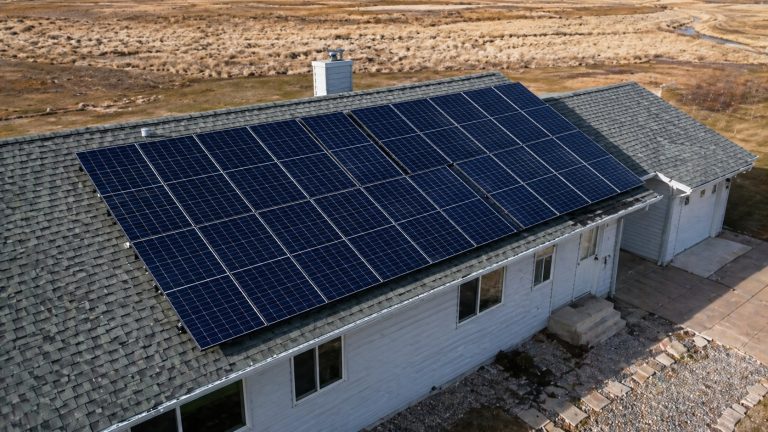
New Roof With Solar Panels: What to Decide First
Quick Answer
If your roof is close to replacement, deal with the roof before the solar panels go on, or plan both jobs together. Once solar is installed, roof work gets harder and more expensive because the array may need to be detached, stored, reinstalled, and tested again. A practical field benchmark for solar removal and reinstall is often about $1,500 to $6,000 for a typical residential system. The decision is not complicated: do not install long-term solar equipment over a roof you already know is running out of life.
Solar on a New Roof
Replace First When Roof Life Is Short
If the roof is already near the end of its useful life, solar should not go first. That creates two jobs instead of one. The roof may still look acceptable from the ground, but brittle shingles, old flashing, soft decking, or past leak repairs can turn into real problems once panels cover the roof plane.
The mistake is easy to make. Solar gets quoted, the monthly payment looks manageable, and the roof gets treated like background detail. Then, a few years later, the roof needs replacement and the panels are in the way. At that point, the homeowner is paying a solar crew just to give the roofer access.
When Existing Roof Solar Works
Solar on an existing roof can be perfectly reasonable when the roof is in solid condition. It does not need to be brand new. It does need enough remaining service life that roof replacement is unlikely to interrupt the solar system soon after installation.
Age alone is not enough to judge that. A 12-year-old roof with good ventilation and clean flashing may be in better shape than a younger roof with poor installation or storm wear. Before signing, get someone qualified to look at the roof surface, attic clues, flashing, and any previous repair areas.
When a Combined Project Wins
A combined roof-and-solar project makes sense when the roof replacement is already coming. The roofer gets clean access first. The solar installer then mounts on a fresh roof surface. Done correctly, that is a much cleaner sequence than installing solar now and removing it later.
One company does not have to do everything. Separate roofer and solar installer teams can work well. What matters is written scope. Who handles flashing? Who protects the roof warranty? Who owns a leak near a mount? Who schedules inspections? If those answers are vague, the project is not ready.
The Real Decision
Use the Existing Roof
This route works when the roof is sound and not expected to need major work soon. It is usually the least disruptive option because the homeowner avoids a reroof before solar.
The risk is a shallow roof review. A satellite image, a quick driveway look, or a sales rep’s opinion is not the same as a roof condition assessment. If the roof is marginal, “solar now” can become “solar removal plus roof replacement” later.
Replace Roof Before Solar
This is the cleanest path when the roof is aging, leaking, patched, or questionable. The roofer can replace damaged decking, correct flashing issues, and install a new covering without working around solar equipment.
The downside is obvious: more work upfront. It can delay the solar installation and increase the first project budget. But that is often better than paying to dismantle a working solar array just to reach the roof underneath.
Coordinate Both Projects
Coordinating both projects can be efficient, but only when the trades are actually coordinated. The roofer and solar installer need to agree on schedule, attachment locations, flashing details, attic access, inspections, and warranty limits.

This is where problems usually start. The roofer assumes the solar contractor is responsible for penetrations. The solar contractor assumes the roof was already suitable. The homeowner assumes everyone talked. Get the responsibilities in writing before the first crew shows up.
Consider Solar Shingles
Solar shingles can make sense when the entire roof is being replaced and appearance matters. They sit flatter than rack-mounted panels and can look more integrated from the street.
The tradeoff is cost and availability. Solar shingles are usually a more specialized product, and the installer pool may be smaller depending on the area. They are not automatically better because the roof is new. They are a different roof-and-solar package, and they need to be compared that way.
Compare Your Options
These choices look similar on a sales proposal, but they behave very differently once the roof ages, leaks, or needs service. The table below keeps the comparison practical.
| Option | Best Fit | Main Risk | Cost Reality |
|---|---|---|---|
| Solar on existing roof | Roof is sound with meaningful service life left | Future panel removal for roof replacement | Lowest disruption now, possible added cost later |
| New roof before solar | Roof is aging, worn, leaking, or near replacement | Higher upfront project scope | Can avoid detach-and-reset costs later |
| Coordinated roof and solar | Homeowner already needs both projects | Unclear contractor responsibility | May reduce duplicated labor and scheduling problems |
| Solar shingles | Full roof replacement plus strong aesthetic preference | Higher cost per watt and fewer installers | Often priced above traditional rack-mounted panels |
The main takeaway: cheapest today is not always cheapest over the life of the roof. If the roof is solid, existing-roof solar may be fine. If the roof is questionable, future access has to be part of the math.
Best Choice by Situation
If the roof is newer and has no active issues, start with a roof check and a solar quote. If the roof is older but not failing, compare the risk of waiting against the cost of replacing now. If the roof already needs replacement, plan the roof and solar together from the beginning.
For homebuyers, the same rule applies. Do not just ask whether the solar system works. Ask how old the roof is, what condition it is in, and whether roof work would require panel removal.
Panels vs Shingles Cost Range
Traditional rooftop solar often shows up in planning ranges around $2.48 to $3.30 per watt before incentives, depending on market, equipment, and installer. Solar shingles are commonly discussed in broader estimated ranges around $3.50 to $8.00 per watt because they combine roofing and solar scope.
Those are planning ranges, not quote guarantees. A solar shingle proposal may include roofing work that a panel quote does not. A panel quote may leave out roof replacement entirely. The only useful comparison is an itemized one.
Cheap Now Can Cost Later
A solar-only project can look like the easy win if it avoids roof work today. But if the roof needs replacement later, the panels have to be handled before the roofer can do the job properly.
Most people miss this part. A roofer is not automatically the right trade to remove and reconnect solar equipment. That future detach-and-reset cost can erase some of the savings from postponing roof work.
Should Roof Come First?
Less Than 10 Years Left
If the roof likely has less than 10 years left, replacing it before solar is usually the safer move. That is especially true for asphalt shingle roofs with visible wear, old flashing, previous leaks, brittle shingles, or suspect decking.
The reason is simple. The solar system may stay in place for a long time. The roof covering underneath may not. If the roof fails first, the panels become an obstacle.
10 to 15 Years Left
This is the judgment zone. The roof may still be serviceable, but the homeowner needs to weigh risk, budget, and how long they plan to stay in the home.
A roof inspection matters here. Look for flashing defects, shingle brittleness, drainage problems, attic stains, ventilation issues, and soft areas. The answer may be solar now, roof first, or targeted roof repairs before solar.
Newer Roofs
A newer roof with no active problems is usually a reasonable candidate for solar, assuming the mounting system is compatible and installed correctly. Newer does not mean guaranteed, but it removes the biggest timing concern.
Still, check the warranty. Some roofing manufacturers have specific rules around solar attachments, flashing, or who can perform roof modifications.
Warning Signs
- Shingles are curling, cracked, brittle, or missing.
- Granule loss is heavy in gutters or roof valleys.
- There are water stains in the attic or ceiling below the roof.
- Flashing around chimneys, vents, or walls is already failing.
- The roof has soft spots, sagging, or suspected decking damage.
Any of these signs should pause the solar decision. They do not always mean the whole roof must be replaced, but they do mean the roof needs a closer look before panels cover it.
The Removal Cost Risk
$1,500 to $6,000 Later
Solar removal and reinstall is one of the most important cost risks in this decision. A typical field benchmark for many residential systems is about $1,500 to $6,000. Some contractors also discuss pricing in rough per-panel ranges, often around $200 to $500 per panel depending on the job.
The range is wide because the work varies. Panel count, roof height, roof pitch, array layout, wiring complexity, racking condition, storage, and access all affect price. If the roof has hidden damage, repair costs can show up after the panels come off.
Why Paying Once Matters
When the roof comes first, the solar installer mounts the system once on the finished roof. When solar comes first and the roof fails later, the homeowner pays for solar handling plus the roof replacement.
There is also a scheduling penalty. The roof crew may be ready before the solar crew can detach the system. After the roof is complete, the array may wait for reinstall and testing. During that gap, the system is not producing power.
What Makes Reinstall Complex
Steep roofs, tall roofs, complex rooflines, dormers, skylights, chimneys, and crowded vent layouts all make removal and reinstall harder. Older racking can also cause trouble if parts are worn, corroded, damaged, or no longer easy to replace.
The electrical side cannot be treated casually. A qualified solar crew should disconnect, label, handle, reinstall, and test the system. Panels are not just roof accessories. They are electrical equipment sitting on a weatherproofing system.
In the field, the better quote is not the one that says, “we can work around it.” The better quote says who removes the solar equipment, who protects the roof, who reconnects the system, and who is responsible if a leak shows up later.
Panels or Solar Shingles?
Traditional Panels
Traditional panels usually make more sense when cost per watt, installer availability, production flexibility, and future service access matter most. They sit above the roof on a racking system, so the roof and the solar array remain separate systems.
That separation is useful. If a panel needs service, it can usually be handled as part of the array. If the roof needs work under the array, removal may still be required, but the solar product is not also the roof covering.
Solar Shingles
Solar shingles fit a narrower situation: full roof replacement, strong appearance preference, and a budget that can handle a more specialized product. They can look cleaner from the street and may appeal to homeowners who dislike the look of raised panels.
But this is not just a solar choice. It is a roofing choice too. Product availability, installer experience, roof complexity, electrical scope, and warranty support all matter.
Aesthetic Value vs Cost
Solar shingles often cost more per watt than traditional panels. That does not make them a bad choice. It means part of the value is appearance and integration, not just energy production.
For a front-facing roof, strict appearance preference, or a high-end reroof, the premium may be acceptable. For a homeowner trying to maximize production per dollar, traditional panels usually deserve the first look.
Not Automatically Better
A new roof does not automatically make solar shingles the right answer. If the home has good roof planes for standard panels, rack-mounted solar may be more straightforward and easier to compare.
Solar shingles should be priced against a real alternative: new conventional roof plus traditional solar panels. Without that, the comparison is incomplete.
One Company or Two?
One Coordinated Contractor
A single coordinated contractor can make scheduling easier. One point of contact can help with roof timing, solar design, permits, inspections, and handoffs.
But do not assume one logo means one expert crew. Some companies subcontract roofing. Some roofers subcontract solar. Ask who is actually doing each part of the work and what license, warranty, and insurance applies.
Separate Specialists
Separate specialists can be the best technical setup when the roofer handles the roof and the solar contractor handles the array. That works well when both sides communicate before the project starts.
The weak spot is the gap between scopes. The roofer may not want responsibility for solar penetrations. The solar installer may not want responsibility for old roof defects. That gap needs to be closed in writing.
Contract Scope
The contract should identify the mounting product, flashing method, roof areas involved, permit responsibility, inspection responsibility, and warranty handling. It should also say whether future panel removal is included, excluded, or separately priced.
Verbal promises do not help much after a leak. A clean written scope protects the homeowner, the roofer, and the solar installer.
Leak Responsibility
Leaks near solar mounts are usually traced to flashing problems, fastener placement, damaged shingles, failed sealant, or existing roof weakness. Responsibility depends on cause, timing, workmanship, and warranty language.
Ask the awkward question early: if water appears near a solar mount, who investigates it and who pays to open the area? That answer belongs in the paperwork.
Decision Criteria Before Quotes
Remaining Roof Life
The first question is not panel brand. It is whether the roof can reasonably stay in service after the solar system is installed. That answer should come from roof condition, not hope.
Project Timing
Roofing, solar installation, permits, inspections, and utility approval do not always line up cleanly. Inspection scheduling alone can add a week or two in some markets, and weather can push roofing work around.
Plan for handoffs. Roof completion, solar mounting, electrical work, inspection, and activation are separate steps, even when one company sells the whole package.
Warranty Terms
Roof warranties can be affected by penetrations, mounting products, or unauthorized modifications. Solar workmanship coverage may apply to installation labor, but not to old roof problems.
Read both warranty documents before the work starts. The important part is not the headline warranty length. It is what happens when roof and solar responsibilities overlap.
Output vs Appearance
Solar shingles may look better on certain homes. Traditional panels may offer better production flexibility and easier quote comparison. The right choice depends on what the homeowner values more.
Do not compare appearance alone. Compare expected output, roof scope, cost, installer support, and warranty terms.
Separate the Financing
Bundled financing can be convenient, but it can blur the numbers. Ask for separate line items for roofing, solar, electrical work, financing fees, and any removal or reinstall allowances.
That does not mean bundled financing is wrong. It means the homeowner needs to see what they are actually paying for.
Mistakes to Avoid
No Roof Review
The biggest mistake is approving solar before the roof has been properly reviewed. It happens all the time because solar quotes move quickly and the roof feels like a separate issue.
The cost can be painful. If the roof needs replacement after solar is installed, the homeowner may face a detach-and-reset bill in the $1,500 to $6,000 range, plus any roof repairs found after the panels are removed.
Assuming Installer Checks Everything
A solar installer may review the roof for array layout and mounting. That is not always the same as a roofing inspection. The roofer is looking at covering condition, flashing, drainage, ventilation, and signs of failure.
On a borderline roof, both views matter. A roof can be technically installable for solar and still be a poor long-term decision.
Roofer Removes Panels
A roofer should not remove and reconnect PV equipment unless they are properly qualified and authorized for that work. Solar equipment has to be shut down, disconnected, handled, reinstalled, and tested correctly.
Using the wrong crew can lead to damaged connectors, cracked modules, unsafe wiring, failed inspection, and warranty arguments.
No Solar Shingle Comparison
Solar shingles should be compared against the full alternative: a standard roof plus traditional solar panels. Comparing them only against ordinary roofing hides the solar part of the cost.
That is how homeowners get surprised. The comparison needs to include cost, production, roof scope, warranty, service access, and installer support.
Unclear Leak Liability
Vague leak responsibility is a bad sign. If water shows up later, the roofer may blame the solar mounts and the solar installer may blame the existing roof.
That dispute should be prevented before the job starts. The scope should explain who investigates, who repairs, and how responsibility is determined.
Narrow Cost Context
Traditional Solar Cost Range
Traditional rooftop solar is often discussed in planning ranges around $2.48 to $3.30 per watt before incentives. For this topic, that number is only background context.
The roof can change the decision fast. A low solar price is less attractive if the roof will likely require panel removal later.
Solar Shingle Cost Range
Solar shingles are often discussed in estimated ranges around $3.50 to $8.00 per watt. The range is broad because these jobs may include roofing, electrical work, product-specific labor, roof complexity, and brand differences.
Ask for itemized pricing. Otherwise, you cannot tell whether the higher number is coming from the roof, the solar product, electrical work, financing, or installation complexity.
Future Removal Costs
Future removal is the cost that gets left out of too many decisions. If the roof is replaced after panels are installed, the array usually has to be detached and reset.
So a roof that is “fine for now” may still be a poor match for solar if it is likely to trigger removal costs during the system’s useful life.
The Real Comparison
The real comparison is one coordinated project versus two disrupted projects. A coordinated roof-and-solar plan may cost more upfront, but it can reduce duplicated labor, access problems, and warranty confusion.
That does not mean every roof should be replaced before solar. It means roof condition has to be part of the solar decision, not an afterthought.
Homeowner Checklist
Get a Roof Assessment
Before the solar layout is finalized, have the roof reviewed for covering condition, flashing, decking concerns, and evidence of previous leaks. A written finding is better than a casual “looks fine.”
Confirm Mounting Details
Ask what mounting system will be used, how penetrations will be flashed, and whether the method is compatible with the roofing material. On asphalt shingle roofs, flashing and attachment details matter a lot.
Check Warranty Rules
Review the roof warranty and solar workmanship warranty together. Focus on what happens if a leak appears near a mount after installation.
Confirm Permits and Inspection
Ask who files permits, who schedules inspections, and whether the roof and solar work need separate approvals. Delays are easier to manage when responsibility is assigned early.
Ask About Future Removal
Ask whether the installer offers panel removal and reinstall service if roof work is needed later. Also ask how it is priced. Even if you never use it, the answer tells you how the company thinks about long-term roof access.
FAQ
Is it better to replace the roof first?
Yes, if the roof is near replacement, has active problems, or is unlikely to last long enough after solar is installed. If the roof is newer and in good condition, solar can often be installed without replacing the roof first.
Can I install solar with 5 to 10 years left?
You can, but it is a riskier decision. If the roof needs replacement during that window, the panels may need to be removed and reinstalled before the roof work can happen.
Are solar shingles better on a new roof?
Not automatically. Solar shingles can look cleaner and may fit a full reroof, but they often cost more per watt and may have fewer installer options. Compare them against a conventional new roof plus traditional panels.
Who fixes leaks after solar installation?
It depends on the cause and the contract. A leak caused by poor solar mounting may fall to the solar installer. A leak tied to old roof defects may not. The contract should explain how leaks are investigated and repaired.
Can roof and solar be financed together?
Sometimes. It depends on the contractor and lender. Even when financing is bundled, ask for separate line items for roofing, solar, electrical work, fees, and any removal or reinstall allowances.